The DM’s Pricing Toolkit
In Why D&D’s Economy Is Broken (And Why That’s Actually Fine) we talked about band-aid fixes to DnD’s Economy. Those band-aids work. but they’re reactive solutions to a systemic problem. What if instead of fighting D&D’s broken economy, you could use real world medieval pricing principles to turn every transaction into an adventure hook? Here’s how…
Medieval merchants didn’t consult standardized price lists, they negotiated in real time based on rarity, relationships, and risk. Your D&D economy can work the same way
Pricing Method 1: The Anchor System
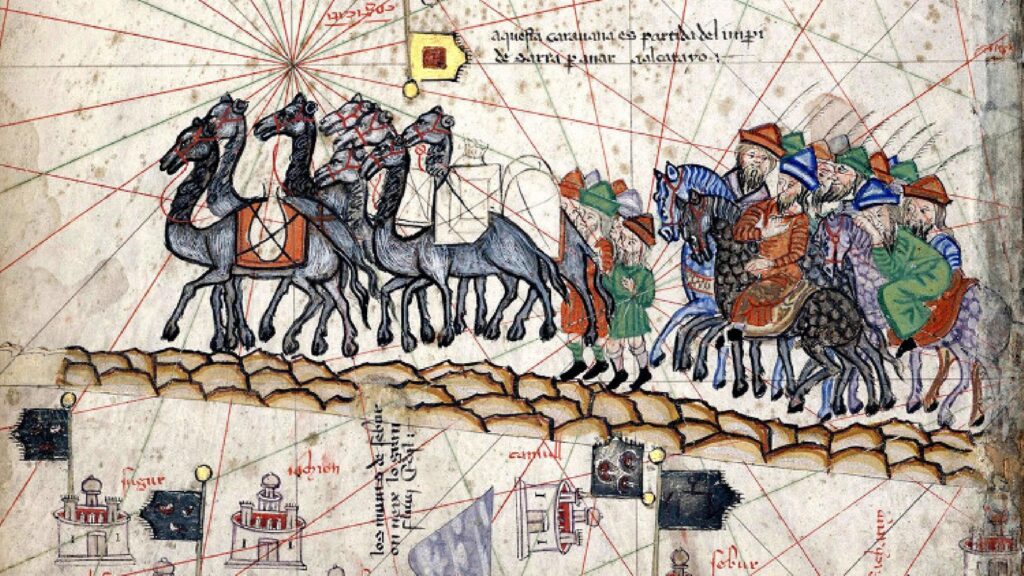
Medieval economies operated on principles that can help solve for these pricing issues. Regional specialization created natural scarcity. Seasonal fluctuations drove price decisions. Transportation costs made distance matter and raised costs. Most importantly, every transaction was negotiable based on relationships, risk, and immediate circumstances.
Medieval merchants didn’t consult standardized price lists, they negotiated in real time based on rarity, relationships, and risk. This gives you permission to be flexible with prices. You can be inconsistent with prices while still being authentic.
To introduce some pricing variances, I started with the magic item rarity progression from the SRD and the crafting rules. Then I copied the progression to represent risk, and added similar modifiers for region.
Rarity:
- Common: Treating this as ×1 cost (easily found locally)
- Uncommon: ×4 cost (special order, takes time)
- Rare: ×40 (significant connections required)
- Very Rare: ×400 (major quest component)
- Legendary: ×2000 (centerpiece of story arc)
Risk Multipliers:
- Safe: ×1
- Questionable: ×4
- Probably illegal: ×400
- Suicidally dangerous: ×2000
Regional Modifiers:
- Coastal towns: Cheap (x0.5) – seafood, salt, spices; Expensive (x2) – grains, worked metal
- Mining settlements: Cheap (x0.5) – weapons, armor, gems; Expensive (x2) – food, textiles
- Agricultural centers: Cheap (x0.5) – grains, livestock; Expensive (x2) – everything else
Working Example: Pricing a War Elephant

Player: “How much for a trained war elephant?”
The process:
- Anchor to known item: Heavy warhorse costs 400 gp in the PHB
- Apply multipliers: Elephant only found in a bordering kingdom (rarity ×4), difficult to train (risk x4) and hard to transport (regional ×2)
- Quick calculation: 400 × 4 × 4 × 2 = 12,800 gp
Tip: Downtime economics:
Some players really love haggling over each and every thing, but in my experience most players don’t. There are few things more excruciating than listening to two people roleplay their trading scenario in the session, unless it’s a key part of the story. Haggling and strange pricing requests are sometimes best solved offline. Our group has a discord channel specifically for this sort of thing.
Method 2: “Yes, And…” Economics
Instead of shutting down unusual requests, transform them into story drivers. Every economic question is really asking “how does this work in your world?”
Player: “We want to buy a flying ship.”
Your Response: “House Lyrandar has one they might sell for 100,000 gp, a binding exclusive transport contract, and proof you can handle the political consequences of owning it by performing a few services for them…”
Player: “Can we hire wizards to research this?”
Your Response: “The Academy would love the project for 5,000 gp per wizard per month, access to your research findings, and you’ll be their bodyguards in the upcoming wizards tourney…”
Notice how each response includes three elements:
- Base cost (using anchoring)
- Potential complications (driving current story)
- Ongoing obligations (potential future adventure hook)
This gives you realistic pricing while creating natural adventure opportunities. That war elephant isn’t just expensive, acquiring one becomes a quest that could involve exotic animal traders, international politics, and transportation logistics.
Method 3: The Help Action
There are lots of existing pricing tables other great DMs have put together that you can easily house-rule – a couple favorites of mine:
- Saidoro’s list of Sane Magical Prices https://drive.google.com/file/d/0B8XAiXpOfz9cMWt1RTBicmpmUDg/view?resourcekey=0-ceHUken0_UhQ3Apa6g4SJA
- Expanded living expenses from Roll20 https://roll20.net/compendium/dnd5e/Expenses
Using expanded prices like these helps take the cognitive load off your brain each time a player wants to buy a thing.
You can also crowdsource. When players catches you off-guard, ask them: “What do you think would be a fair cost and time to acquire this?” (then double whatever they suggest). As a last resort stall and buy for time or create complications:
- “That’s a clever idea! Let me think about what would be involved.”
- “Give me until next session to price that properly.”
- “You’ll need to succeed a series of investigation checks to figure that out”
- “That’s not something you can buy, that’s something you need to earn or find.”
Implementation: The Emergency Pricing Kit
Quick Pricing Reference:
- Take any PHB item as anchor
- Apply rarity multiplier (×1 to ×2000)
- Apply risk multiplier (×1 to ×2000)
- Add regional modifiers (×0.5 to ×2)
- Include story complications
Better Than Gold: Economic Gameplay
Remember that your players aren’t trying to break your economy, they’re trying to engage with your campaign in a creative way. When someone asks about buying a war elephant, they’re really asking about your world. They want to learn more about its politics, transportation systems, and power structures.
Also remember that the goal isn’t economic realism, it’s about providing meaningful player choices. Medieval merchants understood that every transaction was a relationship, every price was negotiable, and every deal created new opportunities or obligations. You can play your campaign economy in the same way.
Your economy shouldn’t necessarily simulate reality, it should drive story. And if a player asks how much that war elephant costs, smile and start imagining all of the potential adventure hooks.