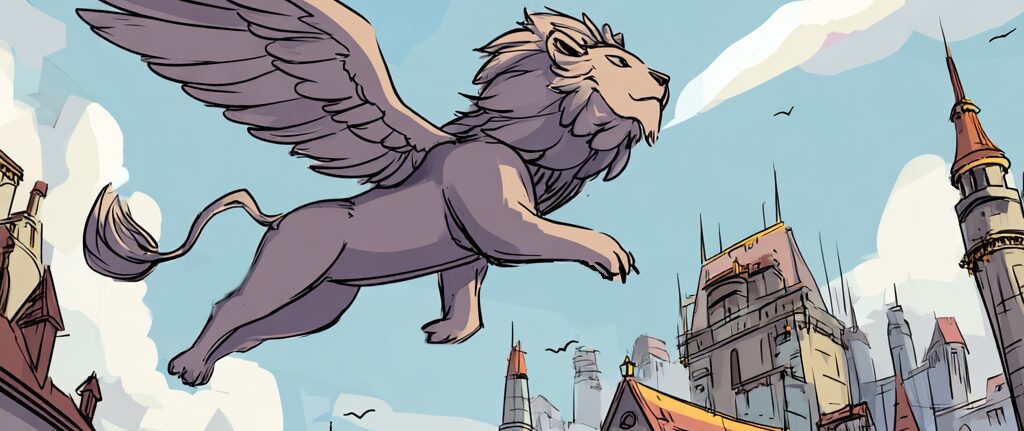
The Economy of the Griffon: Part 2
In Part 1, we explored how griffons cpuld revolutionize trade by eliminating chokepoints, optimizing high-value cargo, and mastering weather conditions. But Lady Brightfeather’s success wasn’t just about having flying predators, it was about understanding the brutal economics behind them…
The True Cost of Griffon Commerce: Investment, Operations & Profit Margins
The first question every aspiring aerial merchant asks is: “How much for a griffon?” which is roughly equivalent to asking “How much for a small kingdom?” The answer isn’t simple, because griffons aren’t commodities you can order from a catalog, they’re business partners with voracious dietary requirements (and a tendency to eat things they shouldn’t).
Initial Investment: More Than Your Village’s Annual GDP
Acquisition Costs That Will Make Your Accountant Weep:
Its hard to capture wild griffons, let alone train them. Its high risk, high reward, with a moderate chance of being eaten. Only the strangely lucky would come across a domestically bred griffon for sale (and do check the paperwork, there’s bound to be a lineage or other problem), let alone a breeding pair.
Infrastructure: Building a Sky Castle
Essential Facilities (Because Griffons Are Particular About Their Accommodations):
You need proper aerie construction – think luxury penthouse with a landing strip, not to mention feeding facilities with prey storage. You’ll also want security measures (griffon theft is surprisingly common – you will need something that keeps your average adventuring party well away).
Operating Costs: The Price of Excellence
Annual Expenses That Never Stop:
There’s also daily feeding (fresh meat – and griffons have expensive tastes), veterinary care, handler salaries (skilled labor and danger pay).
I quoted Master Goldstorm some of these figures, and his face went pale as fresh parchment. “Those costs… they’re astronomical!”
“Yes,” I agreed with the patience of someone who’d had this conversation hundreds of times, “but consider the returns. A well-managed griffon can generate tens of thousands of gold pieces annually in freight revenue. Factor in the speed advantage, route flexibility, and premium pricing for aerial delivery, and most operators see full investment recovery within three to five years, assuming you don’t do anything dramatically stupid…”
Training: Teaching Lions to Fly for Money
The most overlooked cost in griffon commerce is training, both for the creatures and their human partners. This isn’t like teaching a horse to pull a cart; this is like teaching a flying apex predator to become a commercial airline pilot despite their anger management issues. Also, teaching humans to Not Fall Off is actually pretty hard – your average drunken wagon driver isn’t going to last long in the skies.
Regional Economics: How Griffons Reshape Regions
Griffon commerce doesn’t just move goods, it reshapes trade itself.
Example: The isolated Northlands Transformation
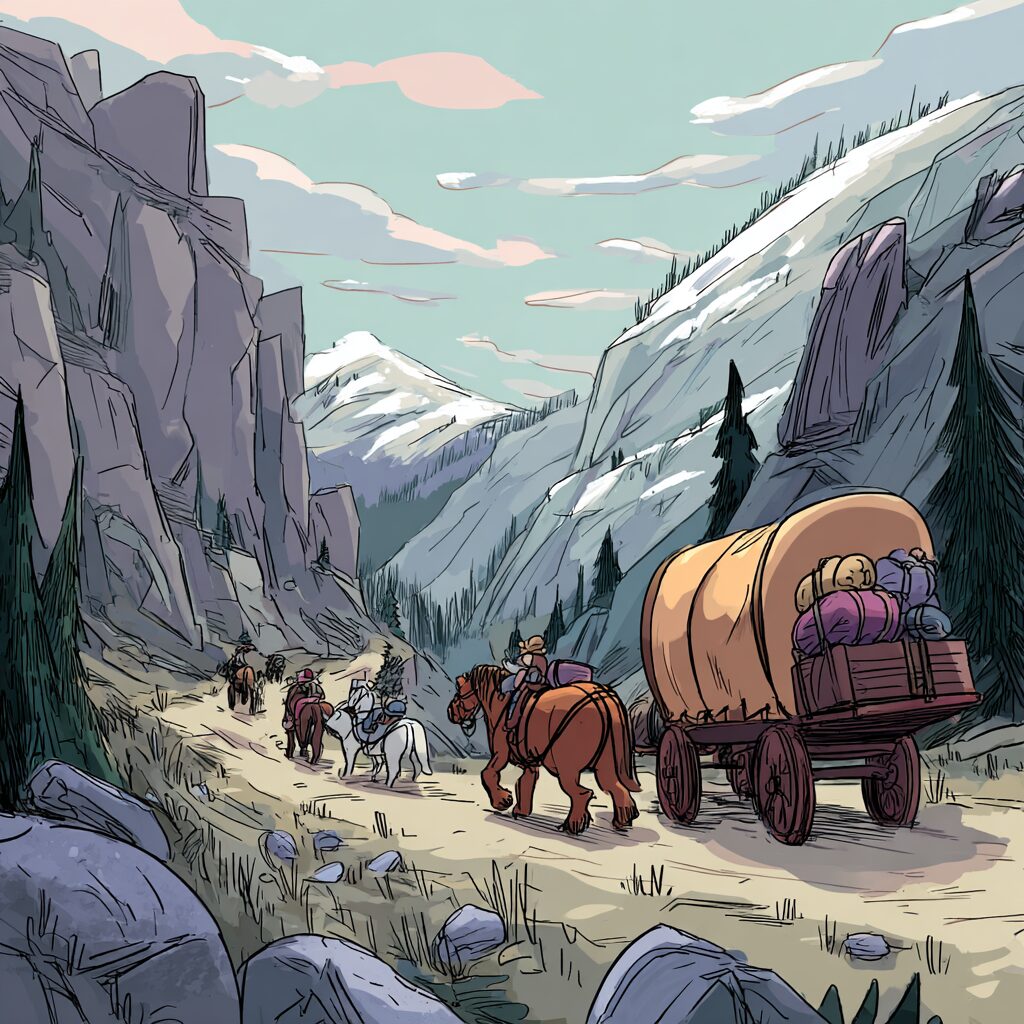
Before aerial trade, the isolated mountain settlement of Frostholm survived on subsistence agriculture and limited mining, connected to the outside world by seasonal pack trains that arrived with the reliability of snowfall, unpredictable and often disappointing. Transportation costs made importing goods prohibitively expensive, while exporting their excellent silver was barely profitable after caravan expenses ate most of the margin.
Griffon freight changed everything faster than a mountain avalanche. Suddenly, Frostholm could import luxury goods economically while exporting their silver at profit margins that made their miners dance jigs in the snow. The town’s population doubled in five years, property values tripled, and new businesses emerged to serve the growing prosperity like flowers after a spring rain.
However, the transformation wasn’t without casualties. Many traditional pack train operators lost their livelihoods, and the old merchant families who had controlled ground-based trade found their influence dramatically reduced. Some adapted; others spent their remaining wealth on increasingly cheaper alcohol.
Territorial Disputes: Drawing Lines in Empty Air
Unlike roads, which follow established boundaries marked by conveniently placed stones and occasional guard posts, aerial routes cross territories with the casual disregard of creatures that consider national borders merely suggestions.
I’ve mediated dozens of disputes between nobles claiming “air rights” over their lands and griffon operators insisting on flight path freedom with the determination of merchants who’ve discovered profitable routes. Generally during negotiations I can get them to follows these simple principles:
- Flight below 500 feet requires territorial permission (usually a bribe helps)
- Emergency landings are permitted anywhere with compensation for damages (ok yes, these are usually very expensive)
- Military airspace restrictions apply during conflicts (and are likely enforced with crossbows)
- Sacred or ceremonial areas may have permanent flight restrictions (violate these at your own risk)
Learning from Real History: The Suez Canal Parallel
There are lots of historical parallels to griffon commerce – one comes from studying the Suez Canal’s completion in 1869. A real-world example of how new transportation technology can reshape economics.
Before the Canal: The Long Way Around
European trade with Asia required the lengthy voyage around Africa’s Cape of Good Hope, over 11,000 miles that took months to complete and enough supplies to feed a small army. This route was controlled by established shipping companies with the resources to maintain such extended operations, creating natural monopolies because of the capital requirements and operational expertise needed to make that long trek.
The Disruption: Cutting Through the Impossible
The Suez Canal reduced the journey to Asia by almost half (40%). Suddenly, smaller operators with less capital could compete in international trade, while established companies found their expensive infrastructure and long-term contracts about as valuable as ice in a desert.
Economic Transformation: Winners and Losers
Within a decade, global trade patterns had fundamentally shifted. British trade with India increased by 30%, while traditional maritime powers like Portugal found their historical advantages reduced.
New shipping companies emerged, while some old-established firms faced bankruptcy or forced consolidation, proving that in commerce, adaptation beats tradition every time.
The Underground Economy: When Good Birds Go Bad
High-value aerial transport inevitably attracts illegal activity like honey attracts bears with similar levels of danger and profitability for those willing to risk the consequences.
The aerial advantage makes smuggling detection difficult. It’s much harder to inspect a griffon at altitude than a wagon at a checkpoint, assuming you can catch the griffon in the first place.
The High-Value Underground Market:
- Luxury goods avoiding import tariffs (because taxes are for ground-based suckers)
- Magical components banned in certain territories (demand for these never decreases)
- Political refugees and wanted criminals (at least the wealthy ones – premium rates for premium risks)
- Military intelligence and strategic materials (governments pay very very well for secrets)
- Contraband weapons and magical items (there’s always a good market for a dagger of venom)
For players reading this and thinking ‘I’ll just take a griffon, thank you!’ we’ll talk more about griffin procurement in part 3.